Diversified Family Farm
Self-reported practices. This farm has provided information about their practices, but they have not yet been independently verified by Bhumi.
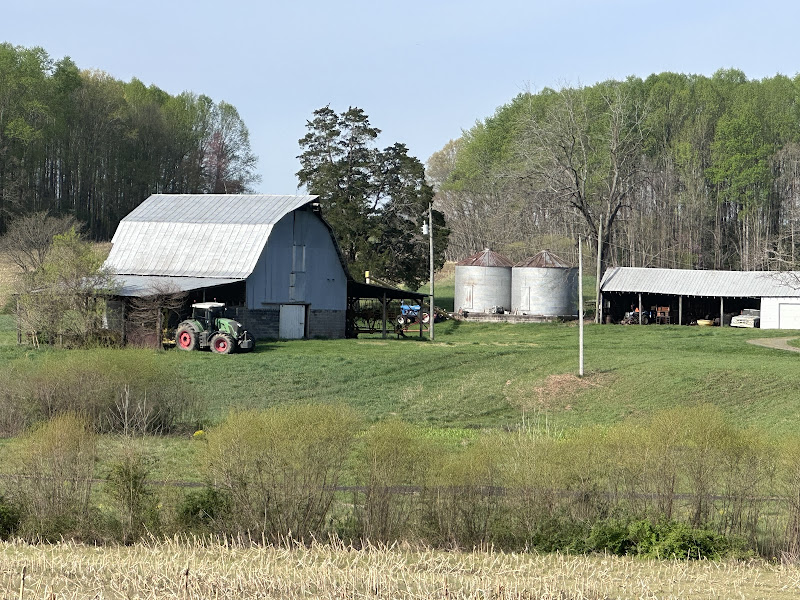
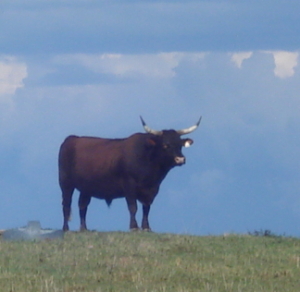
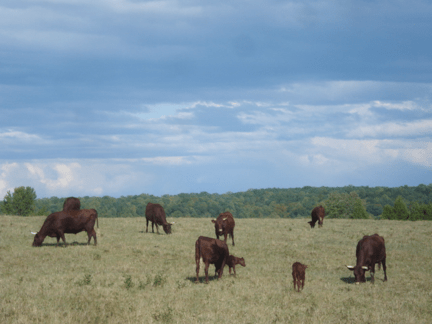
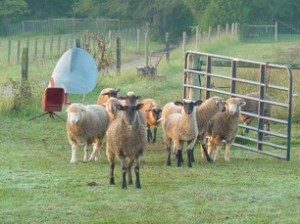
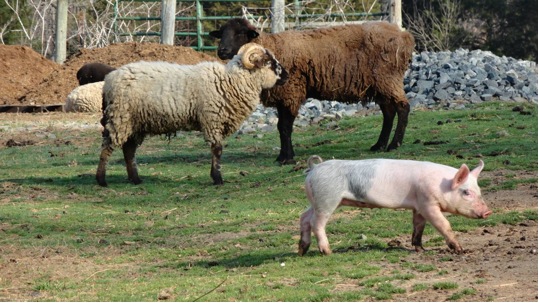
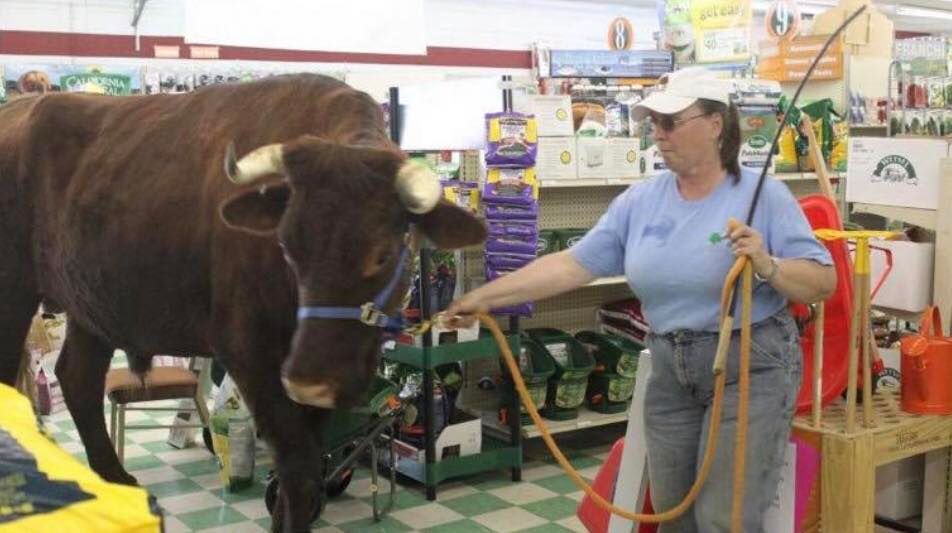
We're Jeff and Ginny Adams, and we've been farming 38 acres in Stafford County since 2000 — land that's been in continuous agricultural production since 1843. In December 2014 we placed the farm in a conservation easement with Stafford County to preserve it forever. We manage the largest remaining flock of Hog Island sheep in existence — a critically rare heritage breed with fewer than 200 breeding ewes worldwide. These sheep originated on a barrier island off Virginia's Eastern Shore and were abandoned after storms in the early 1900s. We work with the SVF Foundation and Virginia State University to preserve their genetics through embryo harvesting and semen collection programs. As Jeff says, "They're rarer than a Panda bear." Our 100% grass-fed, grass-finished American Milking Devon cattle — a heritage breed that first arrived in America in 1623 — never see a kernel of grain. Heritage Tamworth pigs are raised using the Swedish deep bedding method on dirt, not concrete. Raw Jersey cow milk and Oberhasli goat milk are available on-farm through our herd share and feed permit programs. We raise everything the old way: no hormones, no antibiotics, no synthetic inputs, rotational grazing across our pastures, and we still plow with a team of Milking Shorthorn oxen named Chip and Dale. Our farm is also home to Bourbon Red turkeys, Toulouse and Cotton Patch geese, Belgian draft horses, mammoth jacks, and wild burros.
Hog Island Sheep have a unique place in the world. As of the last census there were less than 200 known breeding ewes in the world. These ewes are in the hands of dedicated breeders located mainly in the Mid Atlantic States. The breed itself was native to a barrier island located off Virginia’s eastern shore. The Island was called Hog Island and supported a village until a string of storms in the early 1900’s changed the island to the extent that the villagers left for more favorable conditions. Origins of the original flock are not known; some say the stock was English; others question whether Spanish stock may have been in the mix. There have been reports of a Hampshire Ram being introduced to the flock but the genetic testing does not support the Hampshire ram claim. Genetic testing performed by Dr. Harvey Blackburn with the National Animal Gerplasm Program shows the Hog Island sheeps closest relation is the Scottish Blackface Sheep, but even that is a distant relationship. The current Hog Island sheep are small as a result of adaptation to the harsh island conditions. In a grass based system a mature ewe weighs around 90 pounds; mature rams weighing 125 to 150 pounds, with a grain diet these numbers do increase by 10-20 pounds. Longevity as breeding stock is not known, our flock contains contains ewes over 7 years old that are still producing and raising lambs; one ewe obtain from Mount Vernon had a lamb at age 13; whether these are the exception or the rule remains to be seen. Since we have moved to a more island style of breeding (turning all the lambs out with all the ewes) the health of the offspring appears to have improved. There are a number of interesting traits in the Hog Island breed: they are one of the few feral breeds of sheep; they show little infuences of other breeds in their genetic markers; they thrive well on a grass based diet and are excellent foragers (too much grain can cause issues during lambing). Hog Island Sheep have anything from a single lamb to triplets, fertility appears to be based upon the availability of the forage; good years produce more multiple births. We have not found consistent cases of triplets but our ewes that have twins are apt to do so frequently. The breeding season starts late summer to early fall when the nights turn cool, and ends December/January. The ewes are good mothers, often watching out for other lambs in dangerous situations, banding together to protect the young lambs. Both males and females can be Horned, polled or have scurs. Their wool color is a mixture of black to a creamy white, with some having pale color variations in the fleeces. The faces and legs can be dark in color like a Suffolk or speckled in shades from a dark brown to a lighter color that is almost a gray. Fleeces vary greatly in texture; most are of a medium weight and staple length; some have guard hairs, others have a very wiry fleece. We have not noticed a consistency with these traits from mother to offspring. Hog Island Sheep are a fascinating personable sheep with each individual showing a unique personality. We have noticed that the horns can be unique, almost to the point of fingerprints. Some animals have wide open circular horns and others have winged horns. Some horns have a dark stripe that looks almost like a marker was taken to the full length of the horn as it grew. We have also observed that the horn structure of mother/daughter or father/son are very similar in style and pattern. Here at Walnut Hill Farm we strive to keep the varied genetics of Hog Island Sheep intact as they would have been on the island. We accomplish this by making sure we mix our girls at breeding time, not selecting for any one particular trait. Hog Island Sheep will flock together when startled yet they will stare down unfamiliar visitors to their domain. We have witnessed rams that take on interlopers with reckless disregard to size difference if they feel the flock it threatened. These occurances ha
Meet Jeff & Ginny Adams
Farm Owner
Markets & Stores
Farm store, Farmers market
Bulk & Shares
Herd share (raw cow milk)
Other
Feed permit sales (raw goat milk)
Pickup
On-farm pickup only
Cattle
Cattle: American Milking Devon, Cattle: Jersey, Cattle: Milking Shorthorn, American Milking Devon, Jersey
Pigs
Pig: Tamworth, Tamworth, Hog Island
Sheep
Sheep: Hog Island
Goats
Goat: Oberhasli, Oberhasli
Turkeys
Turkey: Bourbon Red, Bourbon Red
Other
Goose: Toulouse, Goose: Cotton Patch
Loading reviews...