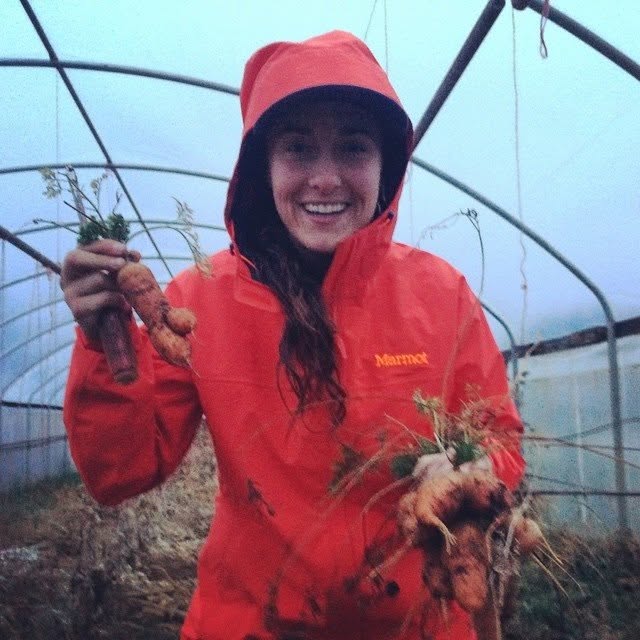
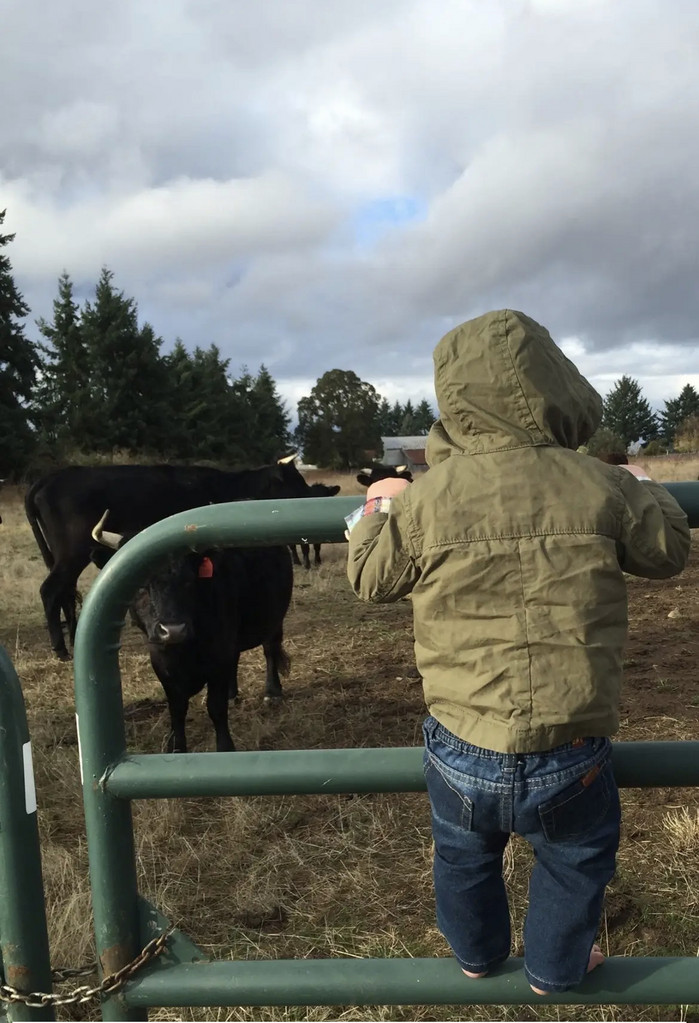
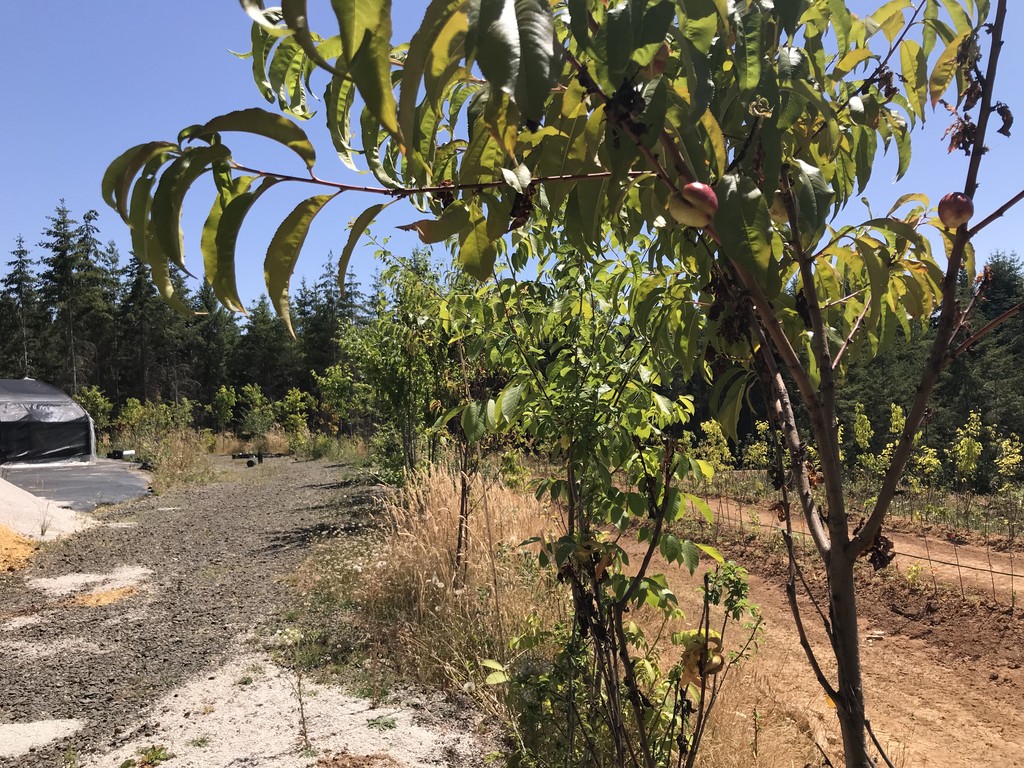
We (Conner and Sarah) are drawn to this livelihood by amagnetism of purpose, abundance, and place. We believe thatagriculture is a culture worth our creative attention; that the story of human life on earth is largely defined by the pursuit of sustenance, and in turn, how we treat the ecosystems that nurture our growth. The seed that grew into this farm was planted in 2001, when we first met at UC Davis. Forged over good meals, bad movies, and backpacking, our friendship brought together a girl from theBay Area and a guy from the Sierra Foothills. Our mutual appreciation for food and the natural world sparked the journey, and now our mutual adoration and respect is what keeps us lovingly inspired. Building a farm together is the life that we envision, because it is work that we enjoy and it is work that we can share. When the farm is our home AND the farm management is a marriage, it takes a lot of intention to cultivate a healthy balance between work and family. Though not always easy, it is infinitely rewarding, and the friendship over good meals continues, now with homegrown food and more family members!We build on our collective agrarian heritage by connecting with our family, friends, and neighbors, fostering strong relationships that tie us to the land and each other. Through careful stewardship, we tend the earth to ensure sustained fertility and biodiversity, honoring the natural cycles that sustain life. We embrace nature’s pace and tendencies, working in harmony with its rhythms rather than against them. In doing so, we support life on the land, both in our homes and in our fields, creating a thriving environment that nurtures generations to come.
Our pursuit of this dream is rooted in a land of injustice and systemic racism. We farm on land that was stolen from the Molalla Tribe. As we reach to transform the food system it is incredibly important that we acknowledge the oppression, racism, and exploitation intrinsic to that system, historic and current. The asymmetrical structures of wealth that exist to empower land ownership, resource acquisition, education, market access, access to credit and capital, the freedom to take large financial risks – these are forces built on a social fabric of white supremacy. We were born with white skin, which has greatly enabled the pursuit of this farm life. We are sitting with this injustice, trying to understand our complacency and complicity, and seeking ways to advocate for our black, brown, and indigenous brothers and sisters. While we work to heal the land, we must also work to heal our community and ourselves, to offer our children the tools and the language to be active participants in an equitable society- one where racism, bigotry, and hate are marginalized to extinction. Centuries of injustice will take many lifetimes to reverse, and each day is a day we have to open our eyes and turn the tide.
On our land,Soil is a Proper Noun, the heart of the farm, and the arbiter of our actions. We invest in our soil through luscious cover crops, diverse and extended crop rotations, minimizing soil disturbance, and by applying as much compost as we can afford. Investment in the soil is an investment in the future of our farm.
Early each spring, regional seed farmers are celebrated as we flip with great admiration and anticipation through colorful catalogues. Buying regionally adapted, organic varieties connects our farm to a sustainable food system, supports other organic farms, and encourages resiliency within the Pacific Northwest climate. We prioritize and wholeheartedly support seed farmers who maintain and improve open-pollinated varieties while focusing on flavor, beauty, and adaptive traits.
Every farmer faces challenges. We choose to address these challenges proactively through preventative measures and controls. Crop rotations break pest cycles, cover crops and flowers provide habitat for beneficial insects, floating row covers establish physical barriers to pests, and v