Diversified Family Farm since 1842
Self-reported practices. This farm has provided information about their practices, but they have not yet been independently verified by Bhumi.
Cumberland was founded on July 7, 1831, on land owned by Samuel Fullen surveyed by Henry Brady. George Fullen's wife Ann was the daughter of George Pogue, an early pioneer settler of Indianapolis. The town plans were recorded just 15 years after the founding of the state of Indiana. Named after Cumberland, Maryland, the eastern end of the historic National Road, Cumberland has deep historical ties centering around the National Historic Road.The first post office was established in 1842. By 1884, the town had grown to over 400 inhabitants, boasting a hotel, a railway station, two sawmills, two blacksmiths, a schoolhouse, and three churches. Cumberland's official incorporation took place in 1951, with the first Town Board elected the same year.As the town has grown and changed for most of its history the town has remained closely tied to the ever-changing landscape of transportation. The Terre Haute, Indianapolis & Eastern Interurban, an electric rail car that traveled in the middle of the street brought many passengers and freight to Cumberland. The now Pennsy trail was once the Pennsylvania railroad was traveled by the funeral train of Abraham Lincoln en route to Indianapolis. From Stage Coaches to Railroads, automobiles, an interurban, planes that used US 40 as a landing strip, and more, the town's early success and growth have been due to its connectivity from travelers to commerce and everything in between, with one of Cumberland's earliest businesses being Little Hotel. As you drive through our town you can still see the preserved echoes of our rich history, displayed within our streets and buildings.Historic structures in this area are listed on the National Register of Historic Places and are protected through the local historic conservation district. The conservation district is managed by the Indianapolis Historic Preservation Commission (IHPC). The conservation plan and guidelines are available on the IHPC website.If you are interested in learning more about the History of the Town of Cumberland visit the town offices to purchase a copy of the book "Cumberland Relections 1831-1988" by Rosalie Lewis. Copy and paste this code into your website. Share this page on your favorite Social network
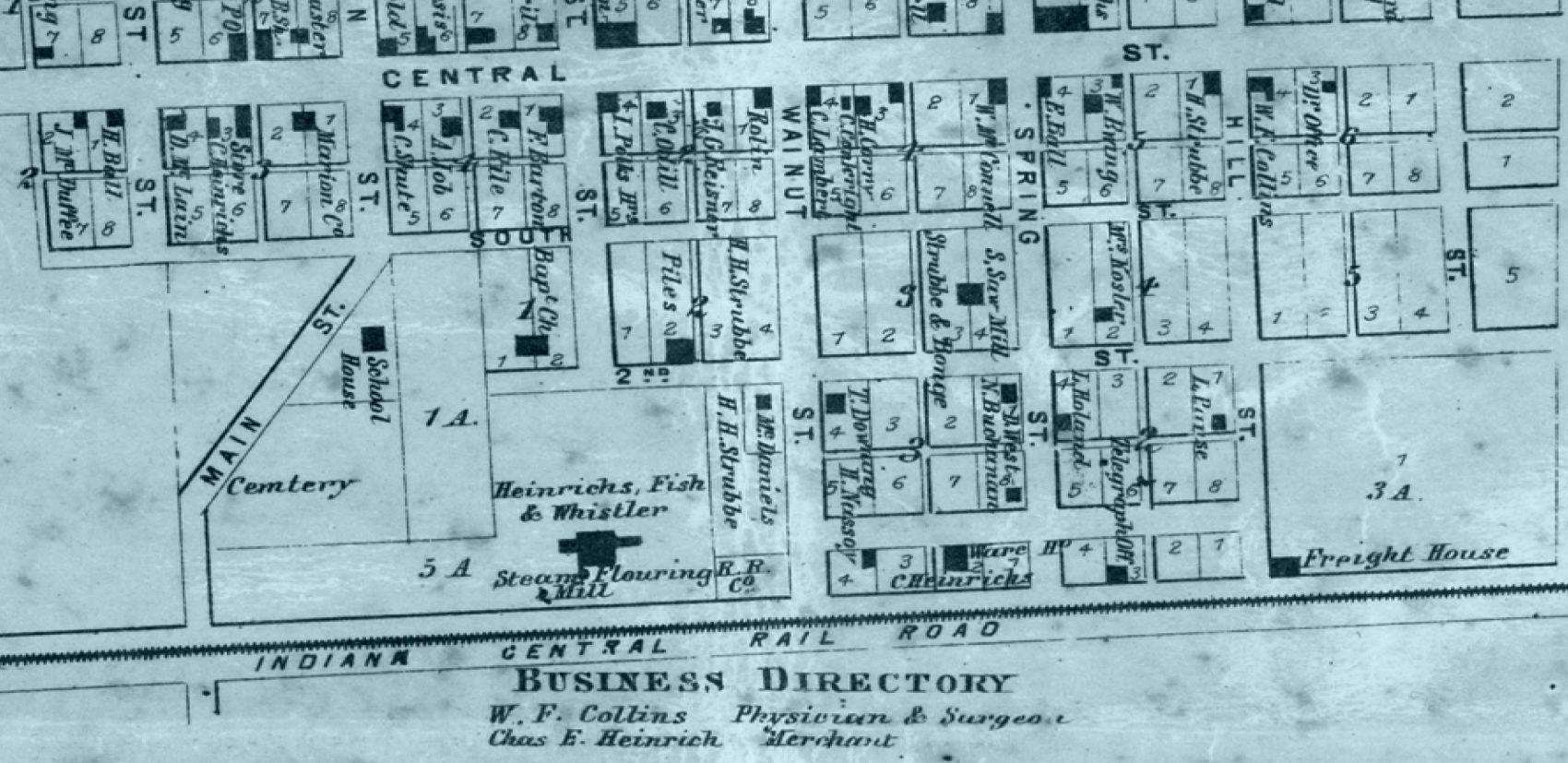
historian@cumberland.in.gov Historic Conservation District Indianapolis Historic Preservation Commission Indiana National Road Assosiation History TourHistory TourDriving PamphletWalking Pamphlet Cumberland was founded on July 7, 1831, on land owned by Samuel Fullen surveyed by Henry Brady. George Fullen's wife Ann was the daughter of George Pogue, an early pioneer settler of Indianapolis. The town plans were recorded just 15 years after the founding of the state of Indiana. Named after Cumberland, Maryland, the eastern end of the historic National Road, Cumberland has deep historical ties centering around the National Historic Road.The first post office was established in 1842. By 1884, the town had grown to over 400 inhabitants, boasting a hotel, a railway station, two sawmills, two blacksmiths, a schoolhouse, and three churches. Cumberland's official incorporation took place in 1951, with the first Town Board elected the same year.As the town has grown and changed for most of its history the town has remained closely tied to the ever-changing landscape of transportation. The Terre Haute, Indianapolis & Eastern Interurban, an electric rail car that traveled in the middle of the street brought many passengers and freight to Cumberland. The now Pennsy trail was once the Pennsylvania railroad was traveled by the funeral train of Abraham Lincoln en route to Indianapolis. From Stage Coaches to Railroads, automobiles, an interurban, planes that used US 40 as a landing strip, and more, the town's early success and growth have been due to its connectivity from travelers to commerce and everything in between, with one of Cumberland's earliest businesses being Little Hotel. As you drive through our town you can still see the preserved echoes of our rich history, displayed within our streets and buildings.Historic structures in this area are listed on the National Register of Historic Places and are protected through the local historic conservation district. The conservation district is managed by the Indianapolis Historic Preservation Commission (IHPC). The conservation plan and guidelines are available on the IHPC website.If you are interested in learning more about the History of the Town of Cumberland visit the town offices to purchase a copy of the book "Cumberland Relections 1831-1988" by Rosalie Lewis.
Meet Samuel Fullen
Farmers Market Owner · Since 1842