Value-Added Producer since 1849
Historic Bear's Mill | United States
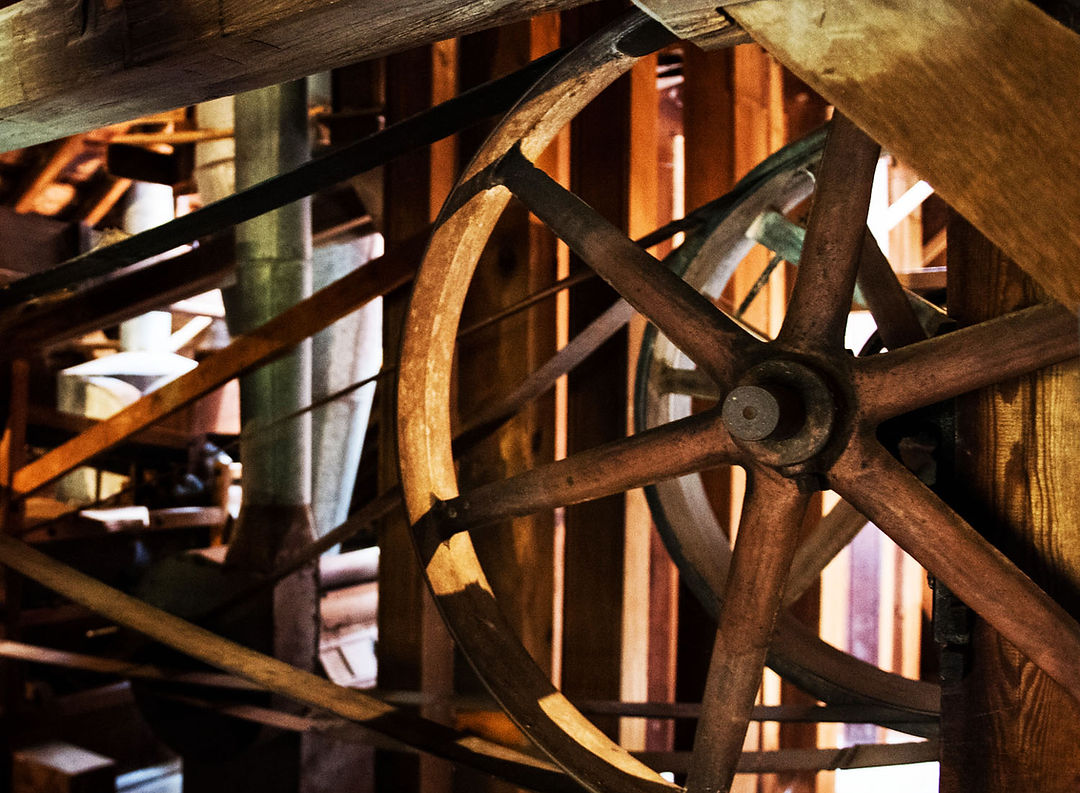
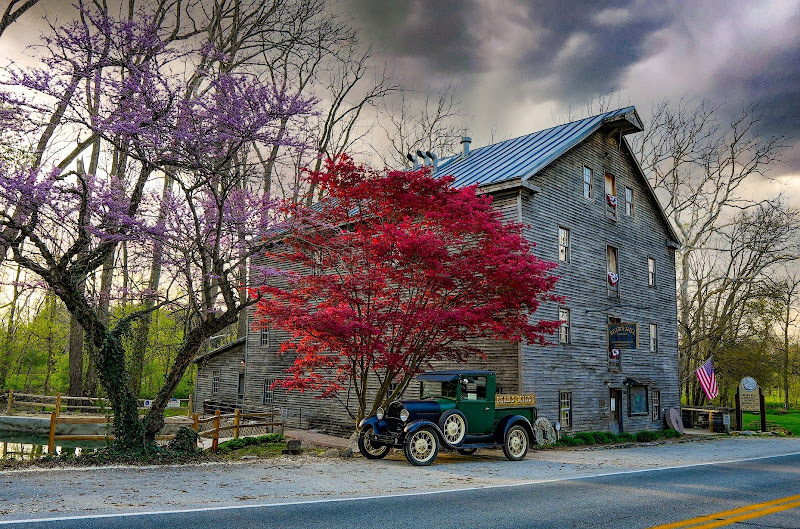
ABOUTMill History Volunteer Press EVENTSMill Events Art at the Mill MILL STOREOrder Flours & Grains Order Flours & Grains FRIENDS OF BEAR'S MILL Bear’s Mill is one of the few operating water-powered mills in Ohio today. A rare historic landmark, The Mill is located on the eastern outskirts of Greenville, Ohio, along a peaceful stretch of creek side woodlands. Built in 1849 by Gabriel Baer, Bear’s Mill’s grand framework is constructed of exquisite hand hewn timber beams that are nearly 50 feet long — without a single splice. Standing four stories high, grain is carried from floor to floor throughout the inner workings of the Mill by the power of the water that runs through the mill race below. Bear’s Mill still grinds grain into flours and meals today, using the same cool grind practices as old world millers. Grain is carefully passed through the French Buhr millstones to produce a healthy, whole, minimally processed product for you to enjoy. Managed and maintained by the Darke County Parks, today’s Mill offers an exciting place to experience a bit of history in a strikingly beautiful setting. In addition to our regular historic tours, the first floor of Bear’s Mill is a celebration of food and nature. The Mill Market carries an eclectic mix of Bear’s Mill flours and meals, gourmet food items, coffee, clothing jewelry and unique home goods here at the Mill OR... you can order our Mill Flours and Grains through the link to our online shop. The Mill Gallery features constantly rotating exhibits that display the paintings, sculpture and photography of artists throughout the Ohio Valley. Always available in the Mill Gallery is a unique array of hand-made pottery. Created by our very own Mill Potters, these pieces have become a favorite of collectors throughout the area. 1824~The location of the mill and the water rights were granted to Major George Adams under a Presidential Deed given by our nations fifth president, James Monroe. 1832~Major George Adams established the mill site with a sawmill and corn cracker mill. 1848~Moses and Manning Hart (from Greenville) began mill construction in 1848, but sold it before completion. 1849-1862~In 1849 Gabriel Baer purchased the mill while it was under construction. He installed the Buhr stones from France. Baer and his son-in-law, Emmanuel Hershey developed the millrace during this period. 1850~January 1, 1850, Gabriel Baer's son John and son-in-law Emmanuel Hershey put the mill into operation. 1861-1865~In 1862 Jesse Tillman and John Townsend bought the mill from Gabriel Baer for $8000. It was feared that the Confederate soldiers would invade the state of Ohio and burn the mill. The mill was closed during the Civil War. 1865-1872~A progression of owners follwed between 1864~1873: William Townsend, Milton and James Oliver, William Bierly, John Tillman (Jesse Tillman's son), Adam Coppess, Levi Reck and Milton Oliver. 1873-1884~From 1873 to 1884 the Stoltz family owned a large share of the mill. In 1882 C.W. Cromer bought an interest in the mill. Shortly thereafter, Cromer put in the roller mills, the latest technology in the milling world. 1884-1948~Stoltz sold his share to his partners son, Marcellus Cromer. Marcellus operated the mill for a total of 65 years. Several years before his death he leased the mill to Charley Andrews, who later purchased it. 1926~The wooden dams were replaced with concrete as part of a flood control project. There are two dams. The main dam is 160'. The second dam is 65' long. They are connected by a natural levee. 1948~Charles Andrews purchased the mill and ground organically grown wheat and corn. 1948-1979~Charley Andrews was an environmentalist and he confronted the city of Greenville in 1960. He recognized that the creek was being contaminated from the city's water treatment plant, reducing the water flow needed to run the mill and heat his home. Charley and his wife, Flossie went to the city to discuss the matter, b
Meet Terry and Julie Clark
Farm Owner · Since 1849
Markets & Stores
Online Store
Not verified by Bhumi. This farm's practices have not been independently verified. Product claims may be based on publicly available information and have not been confirmed.