

🍯
Honey & Bees
Honey7lb Tubs Of HoneyBulk Honey, Cases And BucketsHoney In Glass JarsPropolis
🧺
Farm Goods
Candles And Bees WaxSoap, Salves, And Supplements
📦
Other
5 Frame Bee Nucs
Self-reported practices. This farm has provided information about their practices, but they have not yet been independently verified by Bhumi.
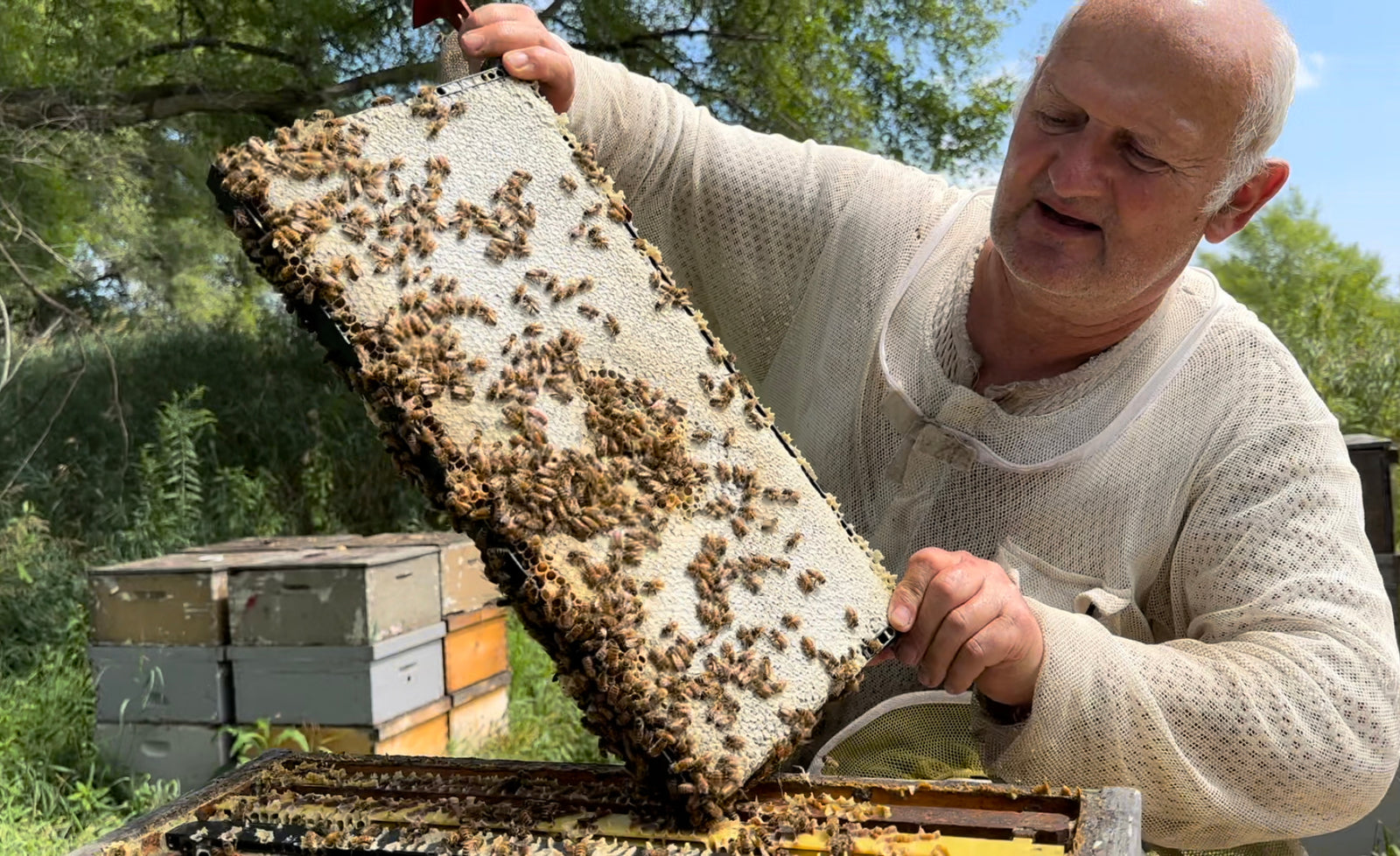
It all began in 1999 when Sergei decided to expand his long time hobby of beekeeping with a purchase of 100 bee hives. (Sergei and his oldest son Roman moving the bees into their new homes) After much labor and bee stings the first honey harvest was over. The boys enjoying the first harvest of honey. Left to right (Daniel, Artem, and Sergei) 1999 After getting a taste of full time beekeeping Sergei knew that he needed more bees to support his family. The following years he would increase his hive count, splitting and buying hives. 2004, with roughly 400 beehives (tractor trailer load) it was time to migrate the bees between Florida and Wisconsin for more honey and warmer winters. 2004, The bees go to Florida for the first time. Now that the bees where in Florida during winter and spring they could collect many different types of honey, which requires lots of moving. The need for a large truck and forklift was quickly realized. Without them beekeeping would be back breaking work. Flat bed truck and forklift for moving bees quickly. In the first years in Florida, Sergei searched for the ideal place to keep bees. Finally, he settled in Wewahitchka, Florida, one of the most unique and beautiful places in the panhandle of Florida. "Wewa" is the center of tupelo honey production. After buying a honey house in Wewahitchka, Sergei could focus on growing his hives once again. As the kids grew up, they also joined in, specializing in different areas of beekeeping. Now we have around 1000 bee hives. The farm has expanded from honey production to collecting pollen, propolis, breeding queens, and making nucleus colonies. The Florida honey house Daniel with a swarm of bees on his smoker! Sergei helping a customer with nucs Our Florida and Wisconsin operations During the winter months, our bees are hard at work in our northern Florida locations where they collect a range of different honey during the weeks of flower blooms. This is the longest season for the bees and for us, as we extract at different times to collect specific honey. In the summer, the bees are all moved back to Wisconsin where they are prepared to collect the summer bloom. All of this work really pays off as we get the best honey at the best locations to offer a great variety of honey that is pure, natural, and just plain wonderful! Our Florida Honey Collection Red Honey– Starts at the end of April Red Honey is collected from all that blooms in February: maple, willow, Tai Tai, and other shrubs. This honey naturally crystallizes very quickly after harvest and becomes soft like peanut butter in about two or three weeks. Red Honey has a mild, pleasant taste and aroma. It is my personal favorite for coffee and baking. Tupelo Honey- Starts at the end of April and Beginning of May Tupelo Honey is collected from the nectar of the Tupelo trees. Tupelo honey is collected only in one place in the world—the Apalachicola River floodplain. It does not crystallize and stays liquid indefinitely. When Tupelo Honey is sufficiently pure (80-90% pure Tupelo), due to its high laevulose (44.3%), low dextrose (29.98%) ratio (average), doctors have been able to recommend some diabetic patients to consume Tupelo Honey. (Please consult your doctor before trying small amounts while watching blood sugar levels). This is one of the most respected honeys in America. Due to the uniqueness, Tupelo Honey's price is higher than any other honey in America. Try it with crapes and pancakes. Gallberry Honey– Starts at the end of May A fine table honey. Typically crystallizes 6-8 months after harvest. Gallberry Honey is harvested from a small evergreen holly bush (also known as inkberry) that grows along the South Atlantic and Gulf Coast and produces a unique honey that is popular throughout the piney woods and swamps of southeast Florida. Try it with tea and toast. Tallow Honey– Starts in June Collected from blooming Tallow trees. It is dark in color and rich in flavor. A fine table hone
It all began in 1999 when Sergei decided to expand his long time hobby of beekeeping with a purchase of 100 bee hives. (Sergei and his oldest son Roman moving the bees into their new homes) After much labor and bee stings the first honey harvest was over. The boys enjoying the first harvest of honey. Left to right (Daniel, Artem, and Sergei) 1999 After getting a taste of full time beekeeping Sergei knew that he needed more bees to support his family. The following years he would increase his hive count, splitting and buying hives. 2004, with roughly 400 beehives (tractor trailer load) it was time to migrate the bees between Florida and Wisconsin for more honey and warmer winters. 2004, The bees go to Florida for the first time. Now that the bees where in Florida during winter and spring they could collect many different types of honey, which requires lots of moving. The need for a large truck and forklift was quickly realized. Without them beekeeping would be back breaking work. Flat bed truck and forklift for moving bees quickly. In the first years in Florida, Sergei searched for the ideal place to keep bees. Finally, he settled in Wewahitchka, Florida, one of the most unique and beautiful places in the panhandle of Florida. "Wewa" is the center of tupelo honey production. After buying a honey house in Wewahitchka, Sergei could focus on growing his hives once again. As the kids grew up, they also joined in, specializing in different areas of beekeeping. Now we have around 1000 bee hives. The farm has expanded from honey production to collecting pollen, propolis, breeding queens, and making nucleus colonies. The Florida honey house Daniel with a swarm of bees on his smoker! Sergei helping a customer with nucs Our Florida and Wisconsin operations During the winter months, our bees are hard at work in our northern Florida locations where they collect a range of different honey during the weeks of flower blooms. This is the longest season for the bees and for us, as we extract at different times to collect specific honey. In the summer, the bees are all moved back to Wisconsin where they are prepared to collect the summer bloom. All of this work really pays off as we get the best honey at the best locations to offer a great variety of honey that is pure, natural, and just plain wonderful! Our Florida Honey Collection Red Honey– Starts at the end of April Red Honey is collected from all that blooms in February: maple, willow, Tai Tai, and other shrubs. This honey naturally crystallizes very quickly after harvest and becomes soft like peanut butter in about two or three weeks. Red Honey has a mild, pleasant taste and aroma. It is my personal favorite for coffee and baking. Tupelo Honey- Starts at the end of April and Beginning of May Tupelo Honey is collected from the nectar of the Tupelo trees. Tupelo honey is collected only in one place in the world—the Apalachicola River floodplain. It does not crystallize and stays liquid indefinitely. When Tupelo Honey is sufficiently pure (80-90% pure Tupelo), due to its high laevulose (44.3%), low dextrose (29.98%) ratio (average), doctors have been able to recommend some diabetic patients to consume Tupelo Honey. (Please consult your doctor before trying small amounts while watching blood sugar levels). This is one of the most respected honeys in America. Due to the uniqueness, Tupelo Honey's price is higher than any other honey in America. Try it with crapes and pancakes. Gallberry Honey– Starts at the end of May A fine table honey. Typically crystallizes 6-8 months after harvest. Gallberry Honey is harvested from a small evergreen holly bush (also known as inkberry) that grows along the South Atlantic and Gulf Coast and produces a unique honey that is popular throughout the piney woods and swamps of southeast Florida. Try it with tea and toast. Tallow Honey– Starts in June Collected from blooming Tallow trees. It is dark in color and rich in flavor. A fine table hone
Meet buying this
Farm Owner · Since 1999
Loading reviews...
| monday | Closed |
| tuesday | Closed |
| wednesday | Closed |
| thursday | Closed |
| friday | Closed |
| saturday | Closed |
| sunday | Closed |