Petersheim Dairy
UnverifiedFarm
Diversified Family Farm
Local Food Delivery — Supporting Small Farms!
Farming since 2001
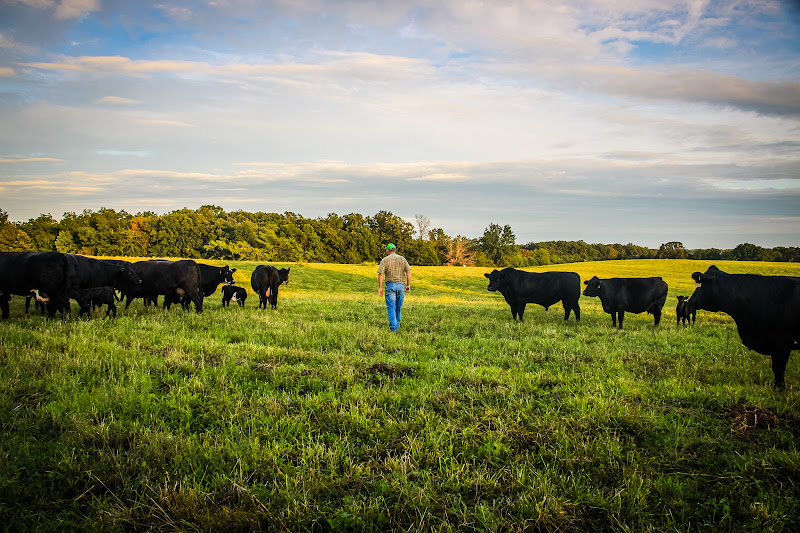
100% Grass-Fed
No Antibiotics
Diversified Family Farm
Local Food Delivery — Supporting Small Farms!
Cattle
Cattle: Bison
Bulk & Shares
CSA Share, Subscription
Other
U-Pick
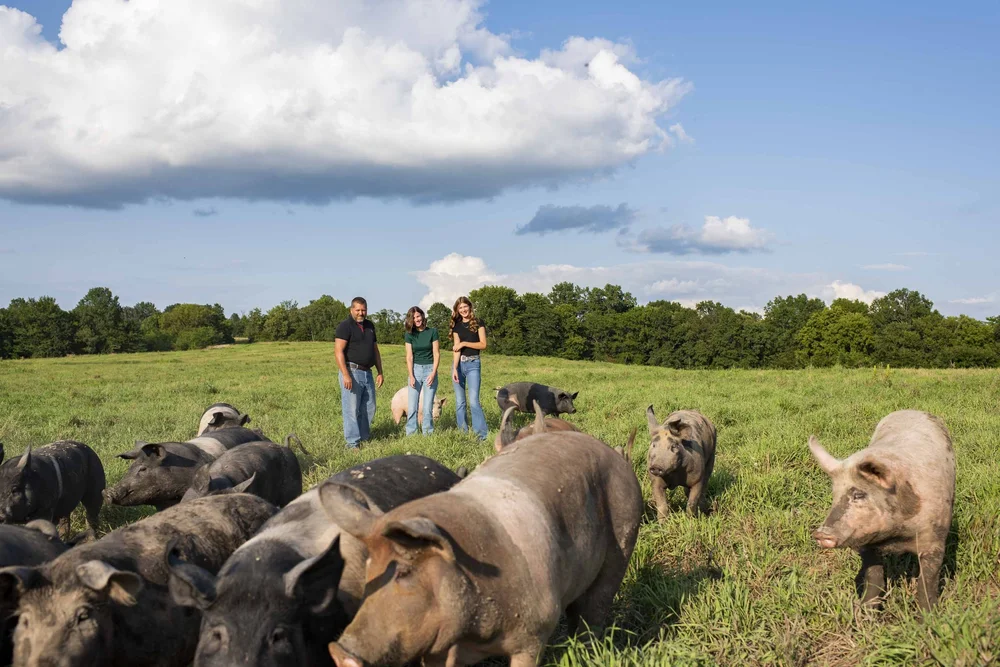
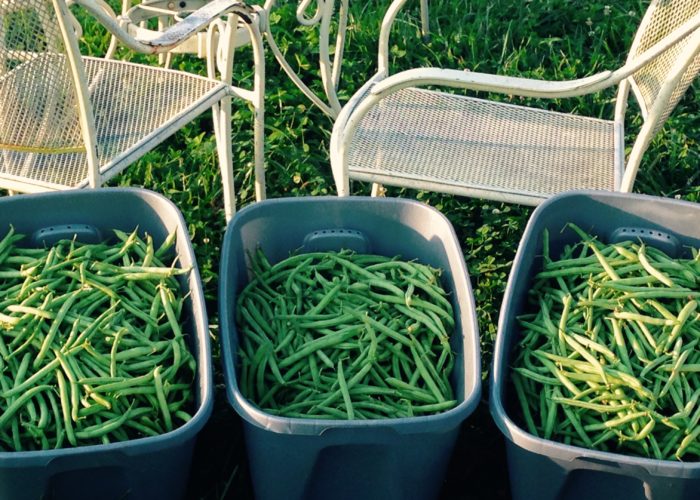
These prices donotincluded sales tax. Some sections *do* include sales take, to help everyone do math easier! Order over $50 and get 10%-off! (excluding milk, honey, buying club, specials, and items over $50 which already have the discount applied!) Hamburger(100% grass-fed, organically grown, 87% lean, Covered-L Farm) — $12.40/lb Baconfrom Patchwork — $10.10/lb Sausagefrom Patchwork — $6/lb Chicken Eggs, cage-free, doz — $4.20Local Raw Honey— $12.20/pt; $22.60/qt Fresh Cow Milkfor home pasteurization― full fat and creamline Various Farms(near Clark, Columbia, or Fayette, MO) May-November: get a box o’ seasonal, mostly chemical-free* veggies from Martha Petersheim (Clark, MO). *only chemicals used are: light fertilizer during greenhouse sprouting and insecticide as needed for brassica transplants Check availability for each veggie (crops can go bust due to extreme weather conditions) Get a box of seasonal veggies, ~15 servings, 8-12lb, $15. Get anytime, no subscription needed (compare this box to weekly CSA box subscribers, who get priority as to veggie availability) Choose your own box, from all the veggies/fruits availabile! (~$2-$5/lb; specify substitutions if you want any), $15 minimum. Get minimum 10lb, of one veggie-type, see discount below! Get part of the 25-week harvest, in a box. Starts around the 1st full week of May. Exact amount in a box-share does vary with the harvest & the season ~ but here are the options: …for CSA subscribers: anytime, add extra what-u-want, veggies or fruits, on top of the usual box. Prices vary, ~$1.50-$3.80/lb for extra produce (delivery fee included) $15 for ~$20 worth of seasonal veggies ~ best buy! Pick your own veggies, order at least $17.20 total = get 10%-off => at least $15 total, after discount Per veggie type, order at least $20 = get 25%-off = pay at least $15 total, after discount. (prices do not include any discount) ** Pastured, chickens a diverse livestock farm, butchered on the farm ** Whole chickens — $6/lb (tax inc.) — check availability (~3-5lb) • Hogs raised with sustainable practices• Non-profit for small hog farmers ― local butchers ― $$$ kept in the local economy• Full product list:http://www.patchworkfamilyfarms.org/productshttp://www.patchworkfamilyfarms.org/ *** Prices DO include sales tax *** Ol’ stand-bys:■ Bacon (brine cured, maple sugar, & smoked) — $9.80/lb (end pieces, $7/lb)–> other kinds of bacon: Brine-cured ($10.20), Pepper ($10.20), Nitrate-Free ($10.20), Bacon Ends ($4.50/lb)■ Pork belly, sliced or slabbed (1lb, 3lb, or 7lb, check availability), $6.10/lb (no curing or smoking or sugar or anything!) — Uncured unsliced Jowl ($4.50/lb; 2-4lb packs)■ Sausage (salt, red pepper, sage, sugar, and black pepper; from AC Leggs mix) — $6/lb■ Ground Pork — $5.30/lb■ Chorizo sausage — $6/lb■ Summer Sausage — $12.80/lb■ Pork Fat (5lb packs) — $3/lb■ Canadian Bacon (1lb packs) — $10.50/lb (end pieces, $7.5/lb)■ Brats (Regular, Sweet Italian, Hot Italian, Chorizo, Andouille) — $7.50/lb■ Pork Chops, center-cut, loin, bone-in (2 per, ~1½ lbs total) — $8.30/lb–> “regular-cut” (~1 inch), but we can also do thin- (0.5 lb each chop) or thick-cut (1 lb each)■ Smoked and Cured Hock — $7.50/lb■ Sausage Snack Stix (4-sticks, 1 lb total) — $7 each For grillin’ or smokin’ or oven’:Pork Steak (2 steaks, 2-3 lbs total) — $6.40/lb Stew Meat (1lb pack, made from whole sirloin) — $7.50/lb Ham Steak (~1 lb, brine cured, center-cut, bone-in) — $10.20/lb Pork Shoulder, bone-in/boneless (2-3 lbs) — $5/5.40/lb Tenderloin Patties (3 or 4 per lb) — $11.30/lb Deli Ham (cured, sliced, and cooked) — $10.50/lb End Pieces of Deli Ham — $4.50/lb True Tenderloin (2 loins, 1.5-2 lbs total) — $12.80/lb Loin Roast, Boneless (1 roast, 2½-3 lbs or 5-7#) — $8.70/lb Ham, Bone-in (cured, smoked; 14-18 lbs) — $7.50/lb — as about uncured!Ham, Boneless (cured, smoked; 8-12 lbs) — $8.70/lb — ask about uncured RIBS!:Baby Back Ribs (meaty & tender ribs, near the loin, ~2 lb) —
I recently found a radio interview of interest. An immunologist blurted out the need for importing more of the Amish lifestyle into the heart of urbanized America. He was pointing out the astonishing lower incidence in Amish communities of allergies, asthma, heart disease, and cancers compared to so much of urban America. A fast summation of the lifestyle differences of the Amish. More physical activity, early and continued exposure to a wide range of environmental microbes. The closer contact with soil, animals, community, raw milk, and vegetables. Lower exposure to herbicides and pesticides. Consumption of their own vegetables, eggs, milk, and home butchered meats. No existence of cigarette smoking. Higher infant mortality due to home births and from accidents due to older forms of mechanization are a reality, however, of these communities’ lifestyle. But the Amish communities are not disappearing. Therefore we see this as an invitation to work together in communities built around sharing our local foods. Teaming up the common values of our two cultures, we at MO Local Routes want to invite you to consider new and challenging lifestyles and foods. We challenge ourselves, no matter our age, to seek more physical activity such as gardening, walking around the neighborhood with friends and family, taking the stairs, etc. In addition, we want to bring to you home food products that reflect healthier food choices. Whole grains in our granola and whole wheat breads can draw cholesterol from your liver to aid in digestion, which could lower bad blood cholesterol levels, perhaps allowing you to avoid or lower medication use (but first, check with your doctor). Higher fiber levels in your diet can also make a healthier colon, and we all know that’s important. Our whole wheat pizza crust, brushed with olive oil, then tomato paste, topped with sauted vegetables and shredded cheese puts 5 phenomenal food choices together — and tastes great. Starting early fall, we may be offering seasonal mixes of cooking greens, root crops, and squash from our various communities’ gardens and greenhouses. The controversy over raw milk consumption rages on. On the plus side, you not only get vitamins A, D, E, K, and C, but you get all the whole-food benefit (probiotics, etc.), as opposed to vitamins added to a food product. An abundance of calcium and phosphorus are readily usable for your teeth and bones due to natural enzymes (such as phosphotase) that work with your body for proper absorption. People with lactose intolerance issues may be able to drink raw milk with no adverse reactions. We invite you to meet your daily calcium requirements with a variety of food products and maybe a glass of milk a day. No sin in adding chocolate syrup. Raw milk can be a source of environmental microbes. We do regular testing for the presence of deadly pathogens often found in raw milk, such as listeria, salmonella, coliform and E. coli 0157-H7. Other less virulent microbes (as well as beneficial probiotics) can appear in your raw milk. For the vast majority of us, our bodies can take care of low-levels of these organisms, and this exposure can keep our immune systems healthy and alert. But to a small percentage of folks with weak immune systems, including people who are recovering from an illness as well as some children under 4 years of age, exposure to these kinds of microbes from any source (dirt, raw vegetables such as lettuce and carrots, undercooked meats, raw milk, etc.) can contribute to disease and in some cases death. All lifestyles choices have risks. We wish to invite you to carefully consider local products in your decision-making towards a healthier lifestyle. All our products taste great and we bring them right to your door. Share on X (Opens in new window)X Share on Facebook (Opens in new window)Facebook Cold brew for Hot days… Strawberry + anything = good The sky is falling chickens!
Meet Martha Petersheim
Farm Owner · Since 2001
Every practice listed here means something specific. Tap any practice to learn what it requires and why it matters.
Not verified by Bhumi. This farm's practices have not been independently verified. Product claims (grass-fed, pasture-raised, organic, etc.) are based on publicly available information and have not been confirmed.
Practices